


The names behind the music: inside Movement’s “Respect the Architects” exhibit
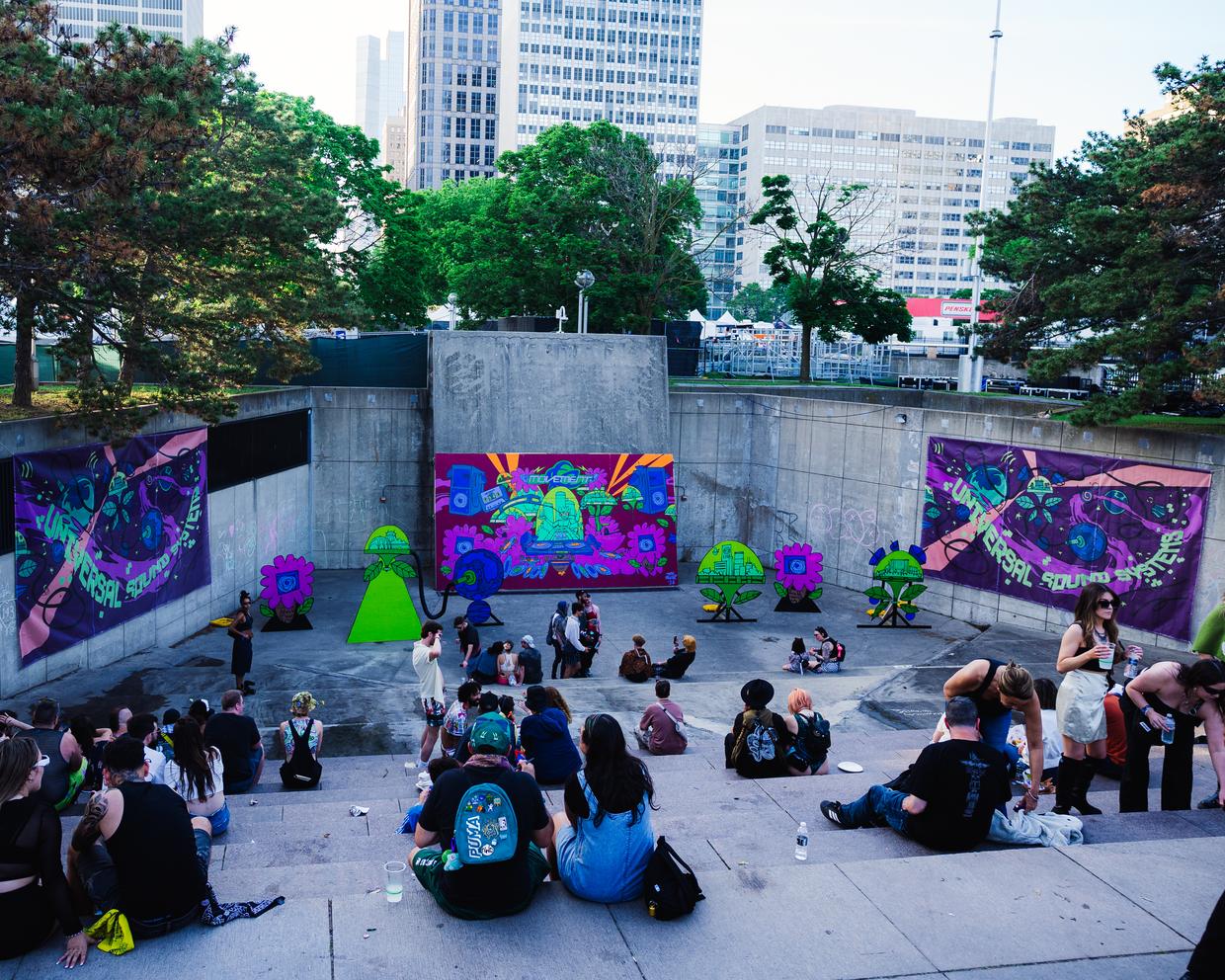
In the depths of the Hart Plaza underground, in a sunken concrete bowl that used to host Movement’s Underground Stage, the “Respect the Architects” exhibit asks the weekend’s crowds to slow down and learn the names behind the music.
Curated by Waajeed’s Underground Music Academy with the Detroit Techno Foundation, it has returned every year since 2022. The story it tells is one Detroit has been telling for decades: there’s a much bigger circle around the Belleville Three than most people ever hear about.
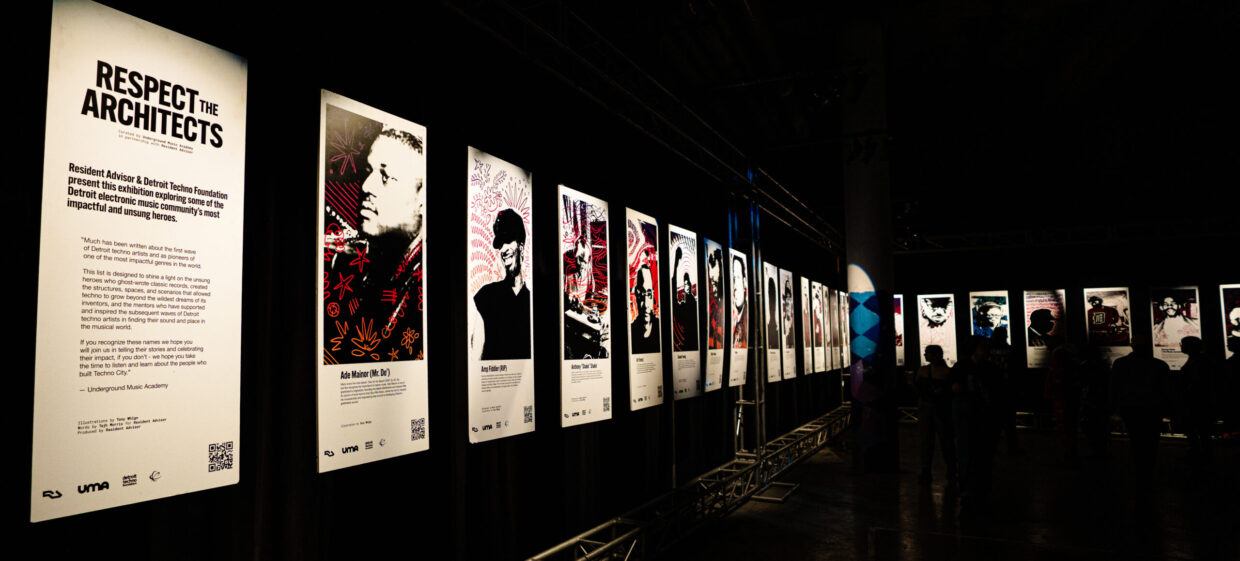
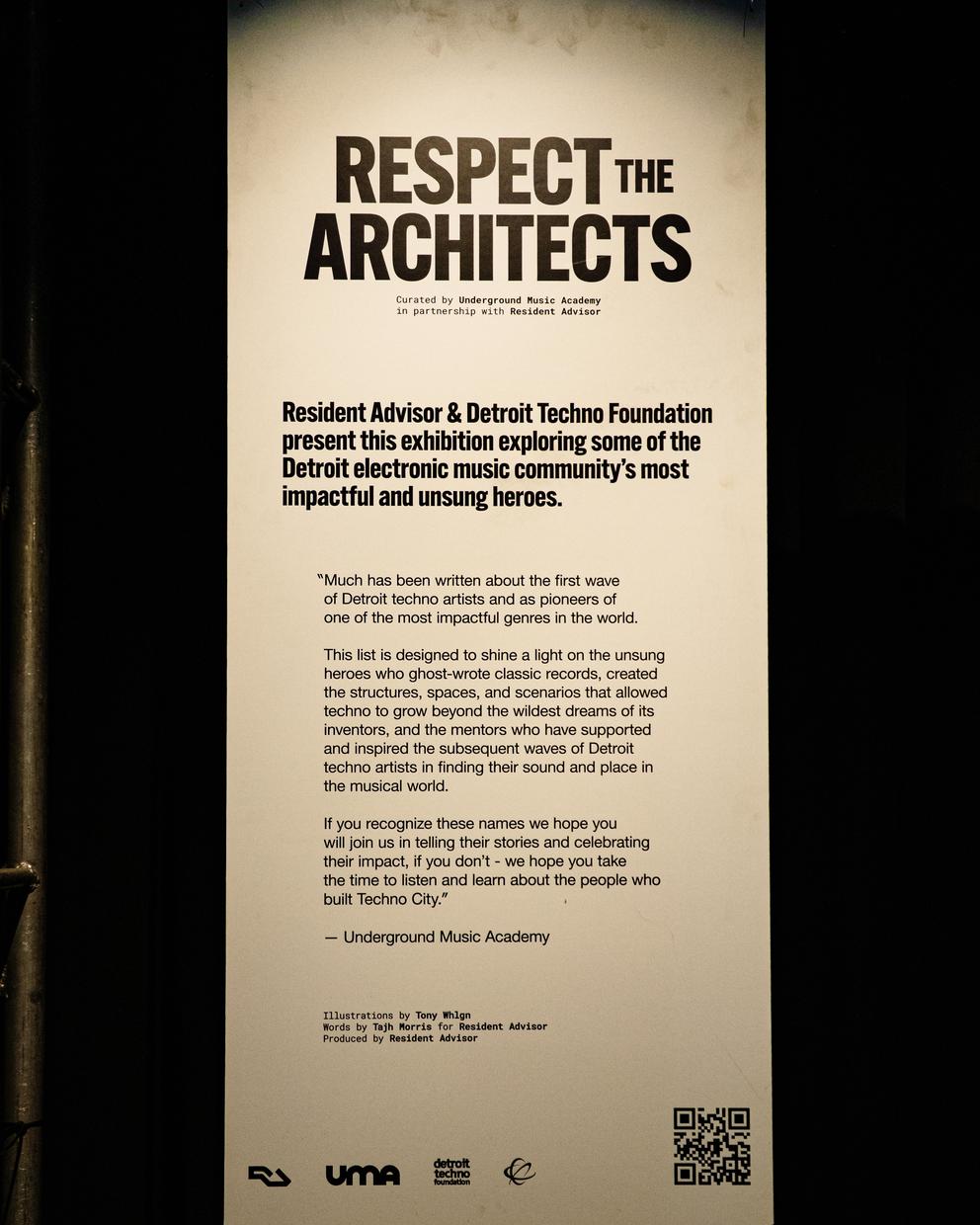
Movement has been telling the Detroit techno story from Hart Plaza for 25 years, in different shapes and under different stewardship. The festival opened in 2000 as the free Detroit Electronic Music Festival, conceived by Carl Craig and Carol Marvin to honor the city’s electronic legacy in the place it came from.
After name changes and hand-offs through Derrick May and Kevin Saunderson, Paxahau took over in 2006, making 2026 the 20th year under the same Detroit based production company.. The festival now spreads across six stages of curated showcases, civic partnerships, and education programs.
The story Movement has told over the last 25 years starts with three friends in Belleville, Michigan. In the 1980s, Juan Atkins, Derrick May, and Kevin Saunderson started making strange, future-facing dance music out of Kraftwerk, funk, and the late-night radio of the Electrifying Mojo. Atkins borrowed a word from the futurist Alvin Toffler and called it techno, later the three would press the first techno records on their own labels; Metroplex, Transmat, and KMS.
Those labels ran on a tight circle that shared gear, studio time, and credits. Most of its members never got close to the fame of the three names out front. Santonio Echols was one of them, Saunderson’s partner in Reese & Santonio, who helped shape the raw, bass-forward KMS sound on tracks like “Rock to the Beat.”
James Pennington came up in the same circle and chased a darker sound, debuting on Transmat in 1987 as Suburban Knight, building the moody and menacing side of Detroit techno on “The Art of Stalking.” He also co-wrote Inner City’s “Big Fun,” one of the biggest records Detroit techno ever produced, even if his name isn’t the one people remember. He later became a mentor to “Mad” Mike Banks and the Underground Resistance crew.
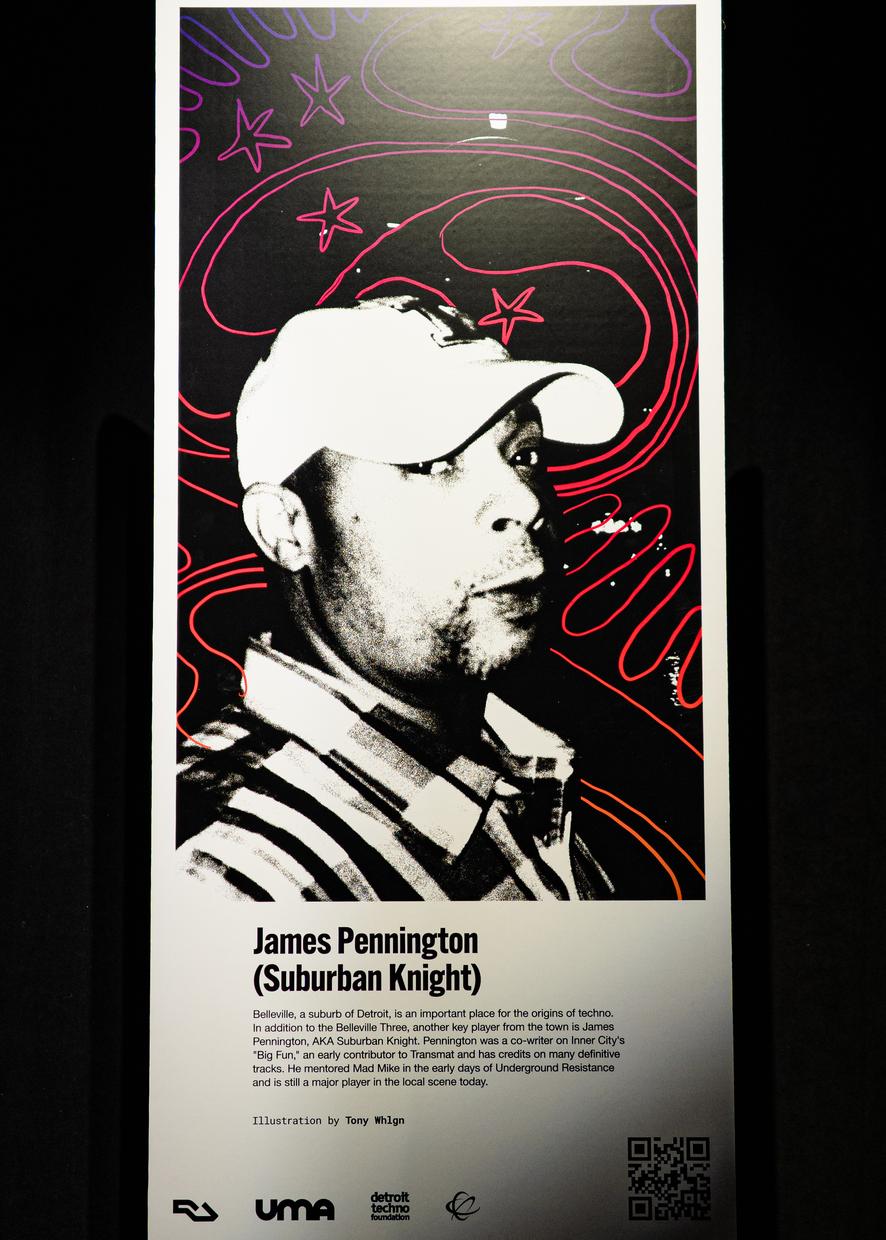
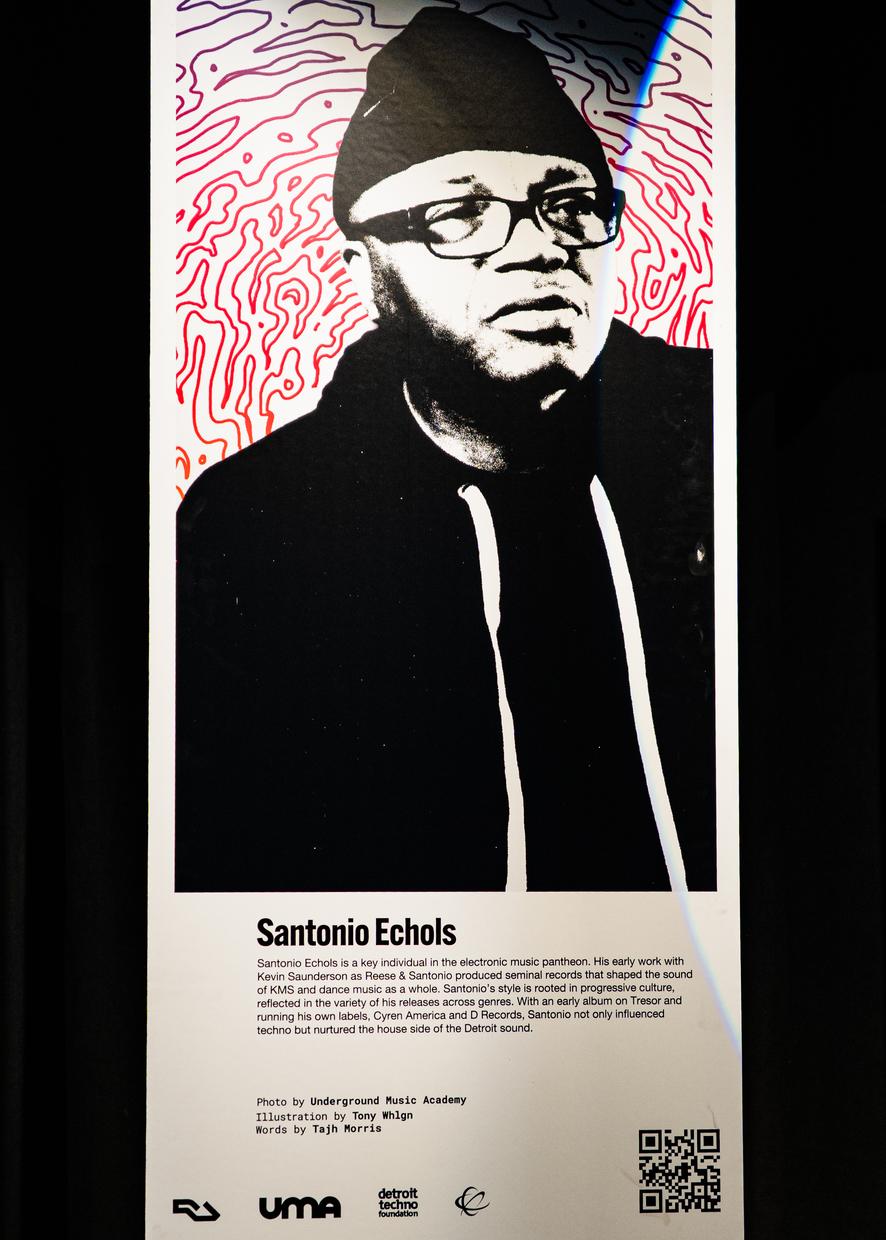
The music also needed places to be seen, not just heard, and the DJs who ran those rooms shaped it as much as the producers did.
Ken Collier was Detroit’s answer to New York’s Larry Levan and Chicago’s Frankie Knuckles, holding court at Club Heaven, a primarily Black, largely queer club where a generation learned what a dance floor could be.
Collier barely recorded, which is why his name travels less than theirs, but the DJs he trained seeded the whole city, including this year’s honoree Delano Smith, who played the Movement Stage on Monday afternoon. Collier died in 1996.
Detroit’s records also passed through Ron Murphy’s mastering lathe, the same one Derrick May and Juan Atkins spotted in the back of his shop in 1989. From that point on, Murphy was the engineer shaping how Detroit techno sounded on vinyl.
National Sound Corporation cut the foundational catalogs of Underground Resistance, KMS, Metroplex, and Richie Hawtin’s Plus 8, and helped invent tricks like the locked groove. And the crisp, deep low end you associate with a Detroit record was usually his doing, and collectors still hunt for the tiny “NSC” he carved into the run-out grooves.
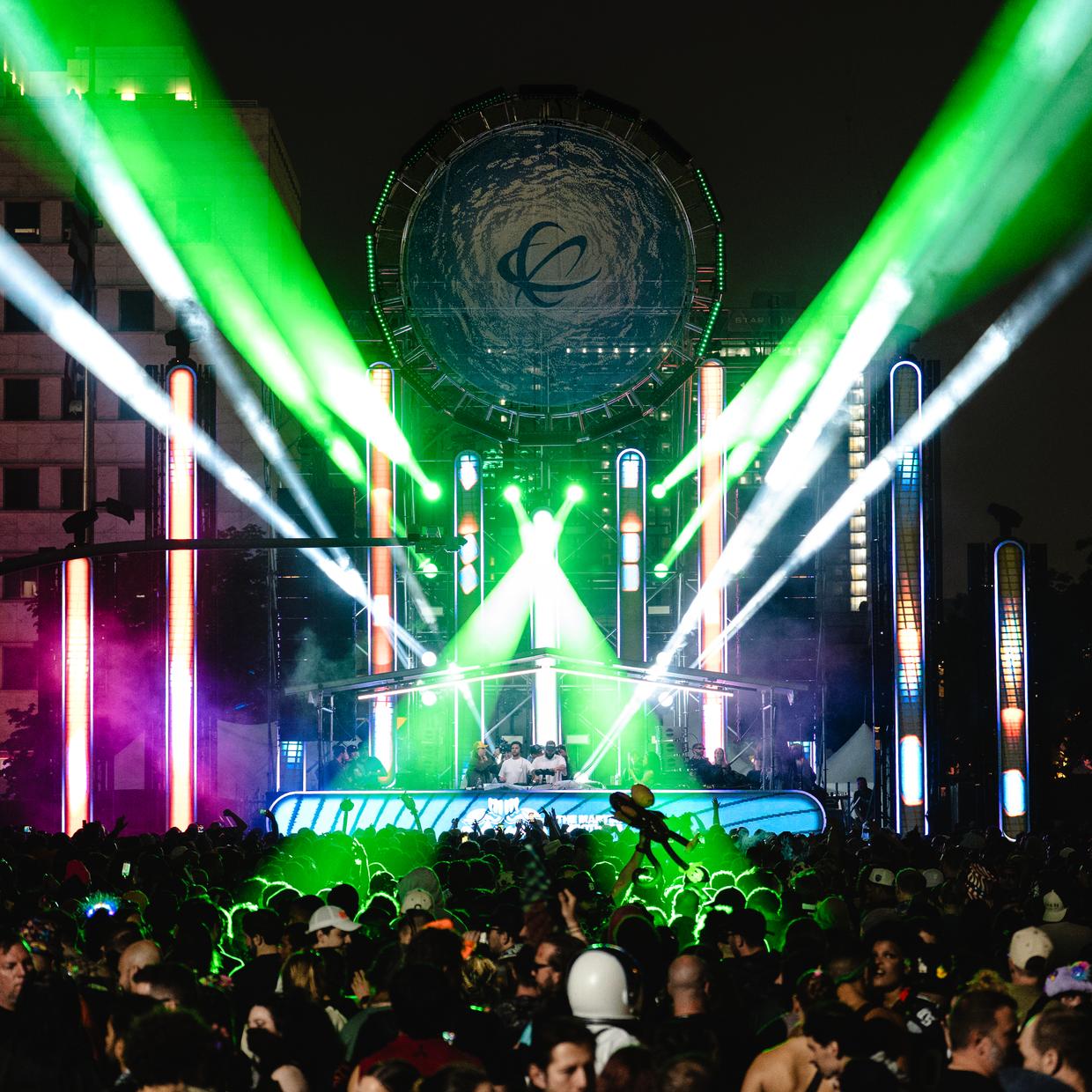
Step out of the amphitheatre and the architects’ lineage was scattered across the stages, by design. Carl Craig ran his Detroit Love showcase and a rare set as 69, the KMS Records showcase brought Saunderson’s catalog to the Pyramid Stage, and DJ Minx hosted her House Your Life takeover. Eddie Fowlkes, one of the kids Collier first inspired to spin, played a back-to-back with the Martinez Brothers, while DJ Godfather, DJ Bone, Stacey Pullen, Stacey Hotwaxx Hale, and Terrence Dixon rounded out the deep Detroit roster.
Kevin Saunderson, one of the original Belleville Three, played E-Dancer with his son Dantiez. Juan Atkins reunited with Berlin’s Moritz von Oswald as Borderland, a reminder of how directly Berlin’s Tresor scene grew out of Detroit’s records.
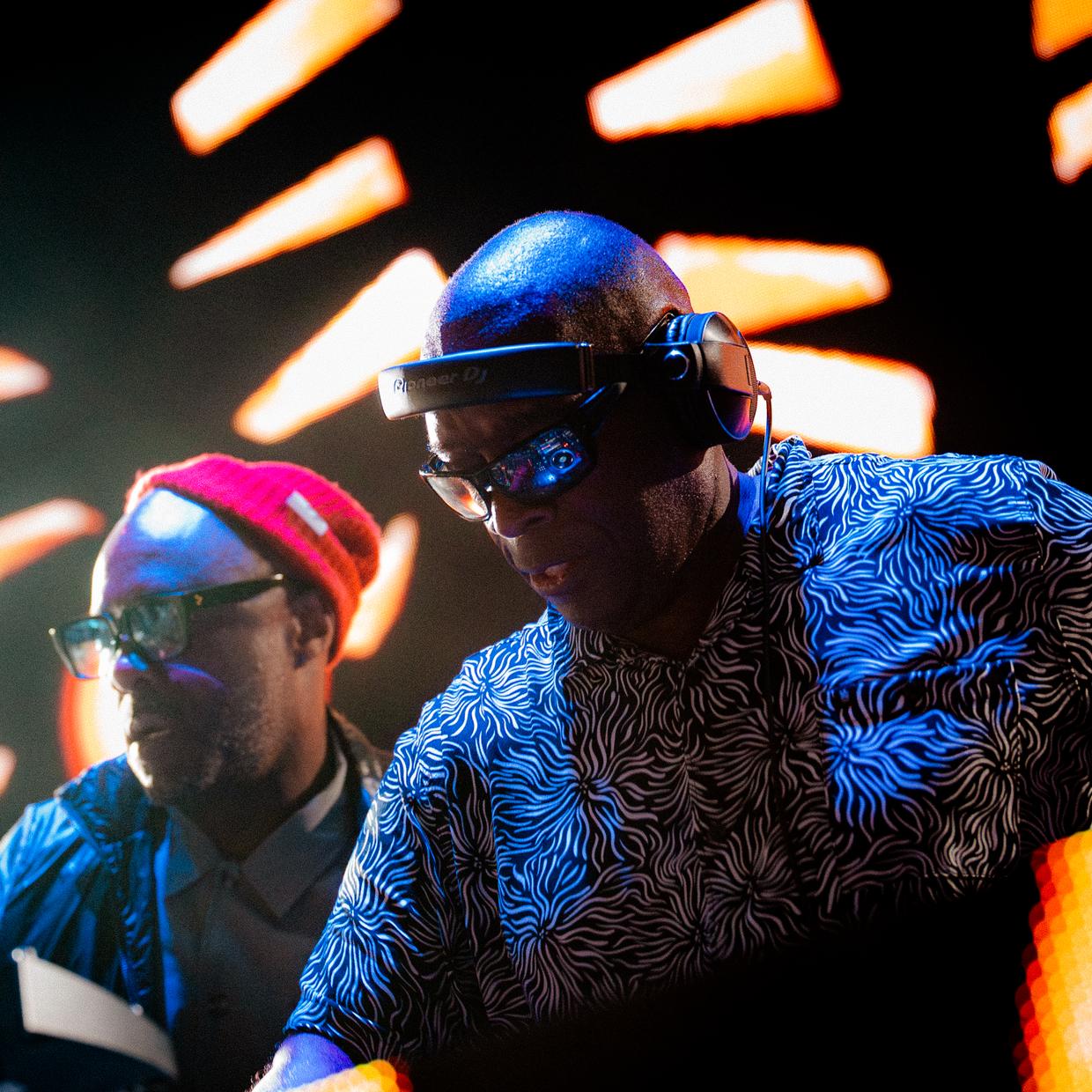
While Atkins kept pushing the music outward, Banks kept building at home. He and Waajeed founded the Underground Music Academy around 2021 to pass along production, DJing, and Detroit’s own history to younger Detroiters, and Movement gave the school its first-ever festival showcase this year, an all-day takeover of the Detroit Stage on Sunday. UMA’s reach now extends into the Detroit School of Arts, where an electronic-music program built with Submerge runs on support from Roland and Paxahau itself.
In the Pyramid Theater, on the opposite side of the Pyramid stage, Detroit artist Tony Whlgn was exploring the same techno roots in a different medium – paint. His large-scale mural, Universal Sound Systems, painted with the local studio 1XRUN, cast Detroit techno as a living signal made in the city’s basements and emerging on the airwaves, while being carried down through the generations.
That same hand shows up inside the amphitheatre. Whlgn illustrated the Respect the Architects portraits, putting one Detroit artist on both Movement’s loudest visual statement and its most intimate one.
Days before the festival opened, Mayor Mary Sheffield, Detroit’s first woman mayor, proclaimed May 18-25 the first Detroit Techno Week, citing Movement as “one of the longest-running dance music events in the world.” Detroit City Council followed with testimonial resolutions honoring Jason Huvaere, the Paxahau co-founder, and Sam Fotias, the festival’s audio director, for their contributions to the city’s musical legacy.
Techno is a Black, Detroit, working-class invention, and its origin story keeps getting shrunk to three names on a flyer. Inside the city that built it, the architects are everywhere you look, in the records, the rooms, and the students now coming up. Movement spends every Memorial Day weekend narrowing that gap, and “Respect the Architects” is one of the ways it does, year after year.
AD


You may also like

AD